

Shopping for carbon fibre parts, you'll see three terms everywhere: dry carbon, wet carbon and forged carbon. The short answer: dry carbon is the lightest and stiffest with the most consistent finish, wet carbon delivers the classic weave at a friendlier price, and forged carbon swaps the weave for a marbled, supercar-style pattern. All three are genuine carbon fibre — the difference is how they're made, how they look and what they cost. Here's how to choose.
The three finishes at a glance
All genuine carbon parts start with real carbon fibre. What separates them is the manufacturing process — and that process drives weight, strength, surface quality and price.
Dry carbon (pre-preg)
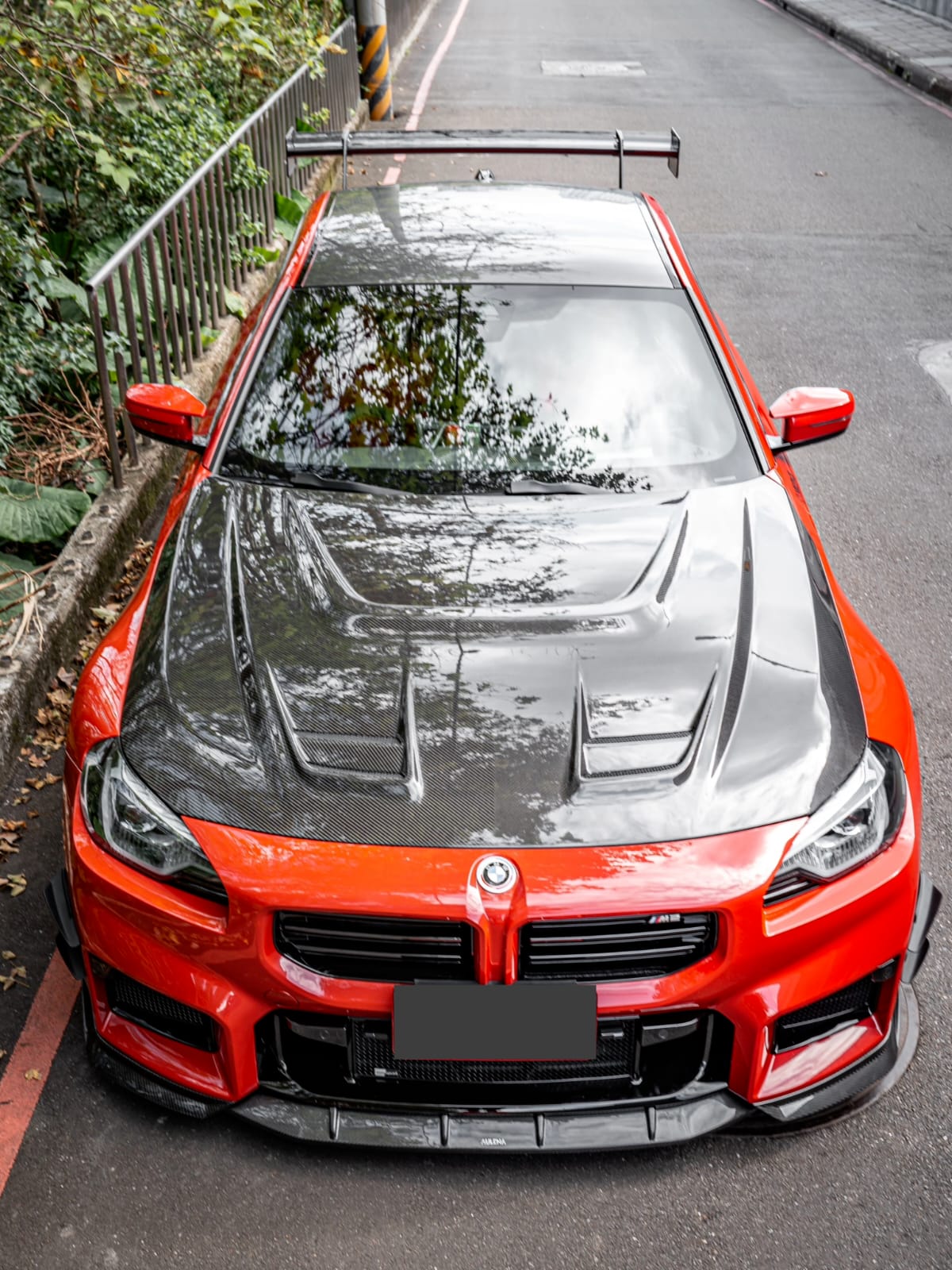
Dry carbon starts with fabric that's pre-impregnated with a precisely measured amount of resin ("pre-preg"), then cured under heat and pressure in an autoclave. Because there's no excess resin, the part comes out lighter and stiffer, with a tight, uniform weave and far fewer imperfections like air bubbles or resin pooling. It's the process used in motorsport and on factory performance parts — and it's why dry carbon commands a premium.
Best for: performance builds, bonnets and larger panels where weight matters, and anyone who wants the sharpest possible finish up close.
Wet carbon (hand-laid)
Wet carbon is made by laying carbon fabric into a mould and applying resin by hand or infusion, then curing without an autoclave. The result is still a genuine carbon part with the classic 2x2 twill look, but it carries more resin — so it's a little heavier, and finish consistency depends more on the maker's skill. The upside is cost: wet carbon delivers the carbon look for significantly less, which is why it's the default for most styling parts.
Best for: styling-first upgrades — splitters, diffusers, spoilers, mirror caps — where the visual transformation matters more than the last few hundred grams.
Forged carbon (chopped-fibre)
Forged carbon doesn't use woven fabric at all. Short strands of carbon fibre are mixed with resin and compression-moulded, producing a random, marbled pattern — no two parts look identical. It was popularised on supercars and has become the go-to choice for builds that want carbon's character without the familiar weave. Structurally it sits alongside wet carbon for most styling applications; the appeal is the look.
Best for: standing out. Forged carbon is a statement finish, and because every panel's pattern is unique, your car genuinely is one of one.
How the differences show up in the real world
Weight and stiffness
Dry carbon wins here — the controlled resin content is exactly why manufacturers like Paktechz build their parts exclusively in pre-preg dry carbon. On a bonnet or a full kit the saving is meaningful; on a mirror cap, honestly, you won't feel it. Match the process to the part: dry carbon where weight and stiffness pay off, wet or forged where the look is the point.
Finish and ageing
Up close, dry carbon's weave is tighter and more uniform, with a deep, glassy surface. Good wet carbon looks excellent too — the gap shows mostly in direct comparison or harsh light. All our parts are finished with a protective lacquer, and whichever finish you choose, UV care matters more than the process underneath (we'll cover carbon care in a dedicated guide).
Price
Wet carbon is the most accessible, dry carbon the premium option, and forged carbon typically sits between or alongside dry depending on the part. Because prices vary by part and brand, check the product page for your model — and remember you can spread the cost with Klarna or Shop Pay instalments at checkout.
See the full range of carbon fibre body kits and parts →
Which finish for which build?
The OEM+ daily
Wet carbon splitter, diffuser and mirror caps give you the factory-plus look without the flagship price. This is where most builds start — and for gloss-finished styling parts viewed at normal distance, wet carbon is the sensible money.
The performance build
Go dry carbon where it counts: bonnet, larger aero, structural-adjacent panels. Brands like Paktechz and TAKD specialise in pre-preg dry carbon parts across BMW, Mercedes-AMG, Porsche and Audi platforms.
The show car
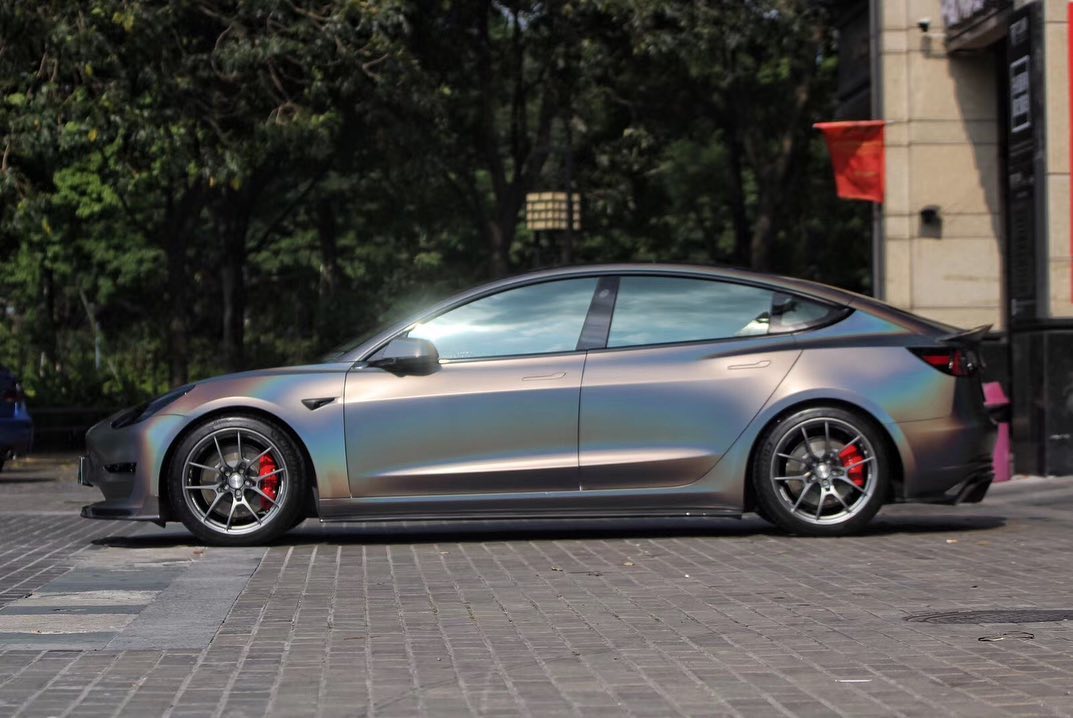
Mix finishes deliberately. A forged carbon spoiler or trim detail against gloss weave panels creates contrast that photographs brilliantly. Several brands we carry, including CMST, offer selected parts with a choice of weave patterns and finishes — including forged and matte options on selected products — so you can spec the same part in the pattern that suits your build.
Matte vs gloss: one more choice
Whatever the process, many parts are offered in gloss or matte lacquer. Gloss shows off the weave's depth and is easier to maintain; matte (or "satin") looks stealthier and suits darker cars. If you want a finish you don't see listed on a product page, message us — alternative weaves and finishes are often available on request for made-to-order parts.
Lead times and ordering
Nearly all of our carbon parts are made to order — the part is laid up for your order rather than pulled from a shelf. Production typically takes around 10 working days, plus roughly 5 days for tracked delivery. Larger items like bonnets and bumpers may ship by sea freight, which takes 30–45 days, so plan bigger builds ahead. As with all aftermarket parts, we recommend professional installation, and minor fitment adjustment is normal.
FAQ
Is wet carbon "fake" carbon fibre?
No. Wet carbon is genuine carbon fibre — the difference from dry carbon is the manufacturing process (hand lay-up vs pre-preg/autoclave), not the material. Replica or "carbon-look" plastic parts are a different thing entirely, and we don't sell them.
Is forged carbon stronger than woven carbon?
For styling parts, the practical difference is small — choose forged for its unique marbled look rather than a strength advantage. For weight-critical parts, pre-preg dry carbon is the performance pick.
How long will my carbon part take to arrive?
Most parts are made to order: around 10 working days production plus about 5 days delivery. Large items shipped by sea take 30–45 days.
Can I pay in instalments?
Yes — Klarna and Shop Pay instalments are available at checkout, and we ship worldwide with tracked delivery. Free UK delivery applies on qualifying orders.
Can I get the same part in a different finish?
Often, yes. Because parts are made to order, alternative weaves and finishes (matte, forged pattern) are available on selected parts — contact us before ordering and we'll confirm the options for your exact part.
Ready to choose your finish?
Build your car the right way — shop genuine carbon fibre with worldwide tracked shipping. Start with our dry carbon range from Paktechz or browse all body kits and parts. Not sure on fitment or finish? Message us before you order and we'll confirm it for your exact model.
New here? Subscribe below and take 5% off your first order.